ServicesPalm Tree Pruning and Removal
Palm Tree Pruning and Removal in Kissimmee
We trim palms so they keep their strength. Spent and drooping fronds come off, seed stalks are cleared, and the green crown stays to feed the tree. A palm that is failing or crowding your home is lowered in pieces, and every frond is hauled away.
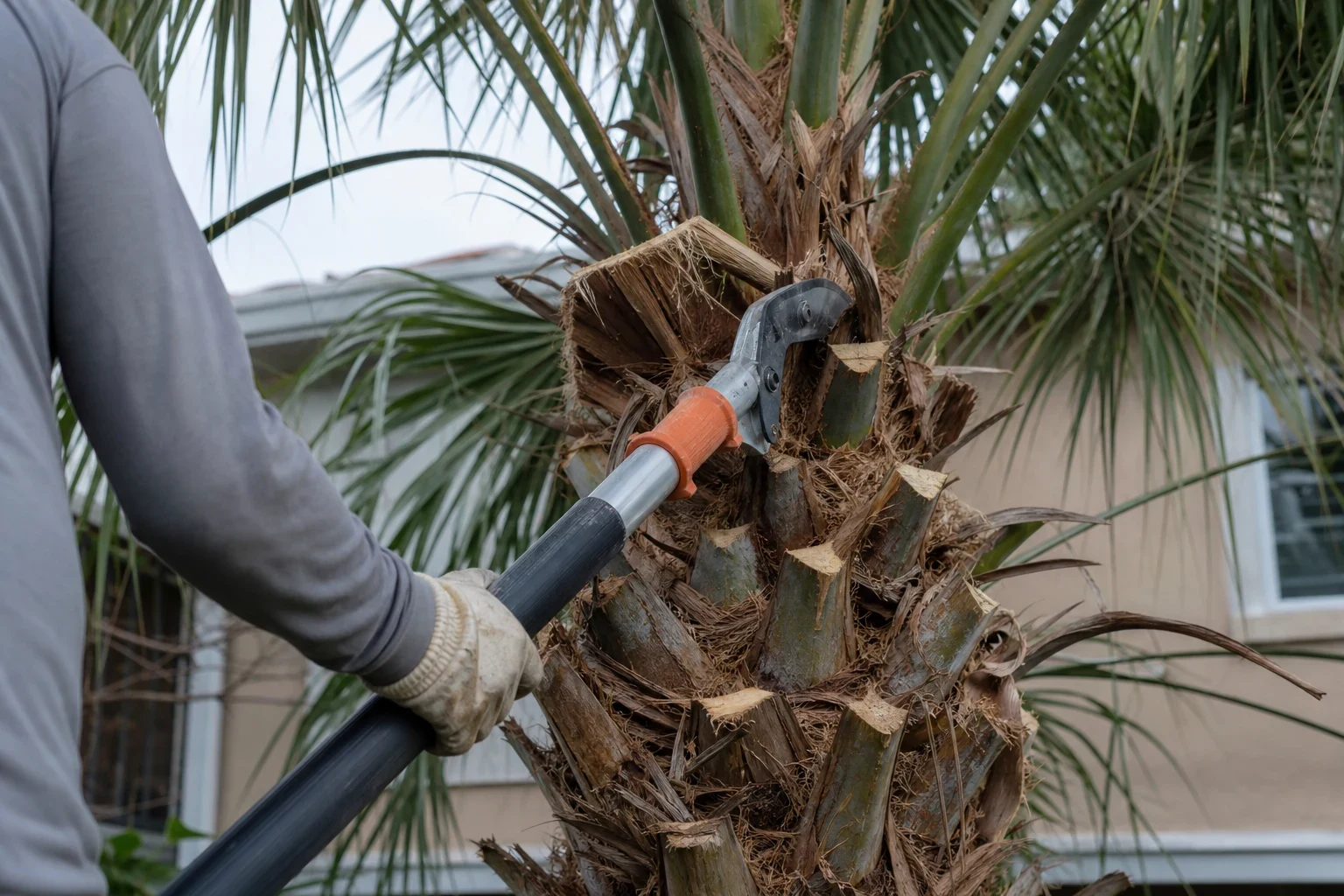
Pruning that protects the palm, not just the view
A palm has one growing point at the top of its trunk, and every green frond is working to keep it alive. Cutting too many of them, the tight trimmed look some crews leave, starves the tree and thins the trunk over time. Our pruning removes only what the palm has finished with, so it stays strong for years instead of seasons.
Taking a palm out is its own decision. No amount of trimming fixes rot at the base, a dead center spear or a trunk tilting toward the roof. Once we have seen the tree in person, we tell you which case you are dealing with and explain our reasoning.
We are family-owned and business licensed, and we have been tending palms around Kissimmee since 2018, from sabal and queen palms beside the driveway to tall Washingtonias along the back fence.
What our palm work includes
- Spent and drooping fronds
- Brown fronds are cut close to the trunk, taking care not to score it. Any frond that is still mostly green stays on, because it is still making food for the palm.
- Seed stalks and fruit clusters
- Flower and seed stalks draw energy from the tree and scatter sticky fruit across patios and pool decks. Clearing them keeps those surfaces cleaner and sends that energy back into new growth.
- Boot cleanup on sabal palms
- Old frond bases, called boots, can trap debris and shelter pests. We take off the ones that are ready to release and leave tightly attached boots alone so the trunk is not torn.
- No spikes on palms that are staying
- Climbing spikes leave wounds that stay open for the life of a palm. To reach the crown of a tree you are keeping, we use a lift or ladder. Spikes come out only for palms being taken down.
- Sectional palm removal
- Tall palms are taken down in controlled pieces so nothing swings into the house, fence or pool cage. The stump can be ground afterward through our stump grinding service.
- Full haul-away
- Fronds are heavy and fibrous, so we load and remove every piece and blow off walks and drives before we leave.
Signs your palm needs attention
Brown fronds bunched under the crown
Old fronds that droop down the trunk act like a sail in strong wind and can let go with no warning. Close to the house they also give pests a hiding spot and add dry fuel.
Yellowing on the oldest fronds
Yellow or spotted lower fronds often point to a nutrient shortage, commonly potassium. Cutting them off makes it worse, so we flag it and adjust our approach rather than stripping them.
A spear leaf that pulls out
If the newest center leaf is brown or slides loose, the growing point may be failing. That palm usually needs removal.
Conks or soft spots at the base
Shelf-like growths or a hollow sound near the soil line can mean butt rot. A palm with internal rot can fall even when the top looks green.
Fronds rubbing the roof or screen
Palms set close to the house eventually brush soffits and pool enclosures. Careful pruning can buy several years, but when the trunk itself is too close, removal is the lasting answer.
How a palm job runs
- 1
On-site walkthrough
We look at each palm, its crown, trunk and base, and what sits beneath it. You get our honest recommendation and a free estimate before any work is scheduled.
- 2
Setting up the area
On the work day we place mats or plywood where equipment crosses the lawn and move or cover anything fragile below the canopy.
- 3
Pruning or removal
We cut cleanly with sanitized tools, which matters because some palm diseases travel on blades. Removals come down in sections, lowered rather than dropped.
- 4
Cleanup and notes
Debris is hauled off, hard surfaces are cleared, and we tell you what we noticed, such as nutrient issues or a palm to watch next year.
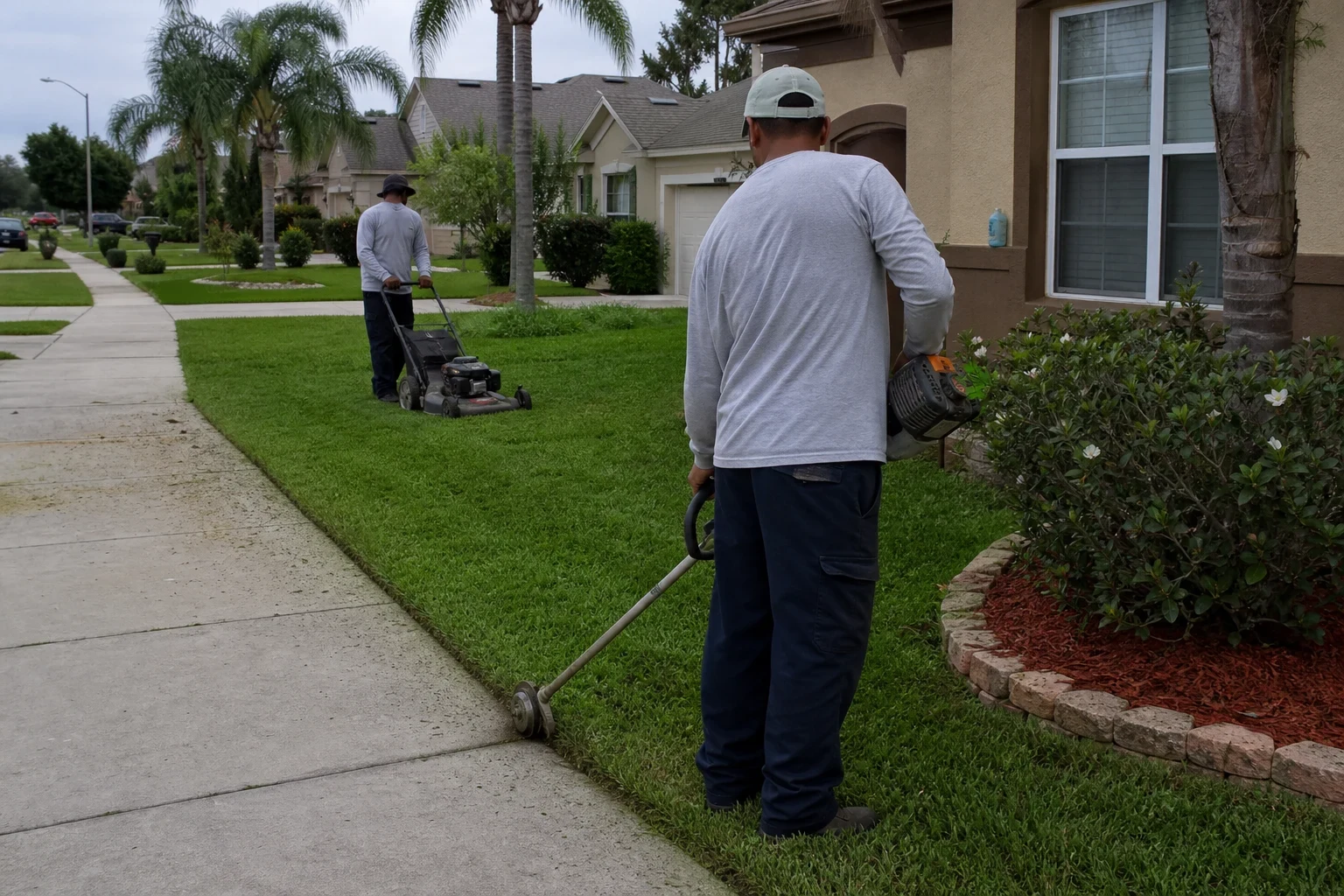
What shapes the price of palm work
We price each palm only after seeing it, since two trees in one yard can be very different jobs. Your free estimate names every tree and the work planned for it. Nothing gets added later without talking with you first.
- Height and species
- Low palms such as pygmy dates can often be tidied from the ground in a few minutes. Royal palms and tall Washingtonias call for a lift and a good deal more time working at height.
- Access to the tree
- Palms behind fences, over pool cages or near power lines take extra rigging and care, which adds time.
- Pruning versus removal
- Removal involves sectioning, lowering and hauling a heavy trunk. Grinding the stump is a separate line item if you want it.
- Number of palms and debris volume
- Several palms in one visit are more efficient per tree. Heavy seed loads and years of built-up dead fronds mean more to haul away.
Common questions about palm care
Something not covered here? (407) 972-1906
How many times a year do my palms need trimming?
For most palms, once a year is enough. Queen palms and other heavy seeders may want a second visit. Plenty of people schedule theirs in late spring so loose fronds are gone before summer storms, and we will recommend a schedule for your trees during the walkthrough.
Why not cut the palm down to just a few fronds so it lasts longer?
Heavy cutting looks tidy for a while but weakens the tree. Green fronds produce the palm's food and help shield the bud in wind. Leaving a full, rounded crown is better for the palm over the long run.
Can a sick palm be saved?
Some can. Nutrient yellowing often improves with the right fertilizer and patience. A palm with a dead spear leaf or rot at the base generally cannot recover, and we will tell you that directly rather than sell repeat pruning.
Do you remove the stump when you take a palm down?
Yes, if you would like it gone. What is left of a palm trunk is dense and stringy and takes years to rot on its own, so grinding is the usual choice when you plan to replant or lay sod in that spot. We list it as its own line on the estimate, and the decision stays with you.
Will equipment damage my lawn?
We lay protection where machines travel and keep heavy gear off soft or wet ground when we can. If any turf is marked, we let you know before we leave.
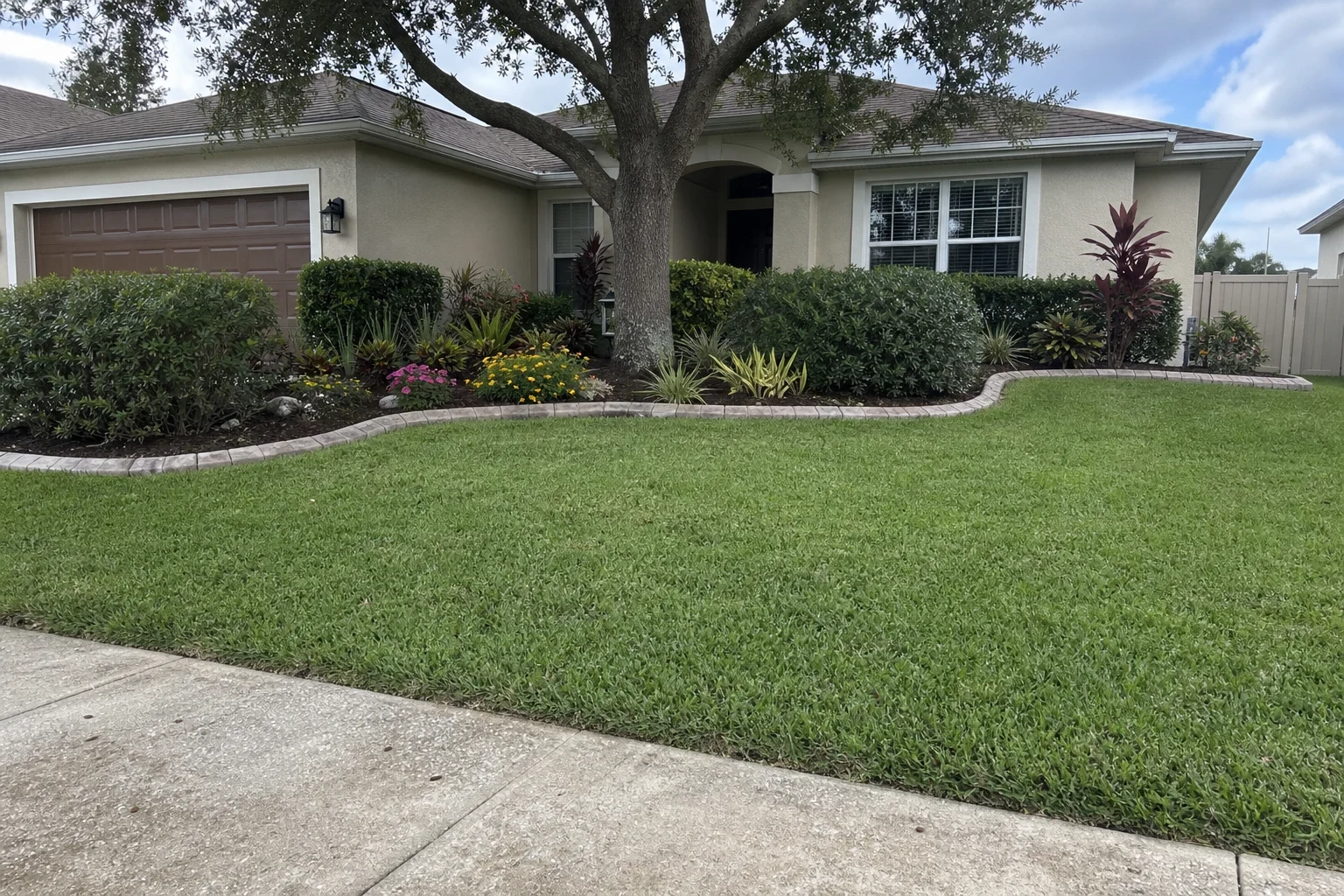
Let us look at your palms
We will walk the property with you, check each palm, and explain what needs pruning, what should come down and what can be left alone. The walkthrough and estimate are free.