ServicesMulch and Beds
Mulch and Bed Care in Kissimmee
We clear, edge and re-mulch your planting beds so they look finished and stay that way. Mulch laid at the right depth keeps roots cool, holds moisture and slows weeds, which means less work for you and longer-lived plants around your home.
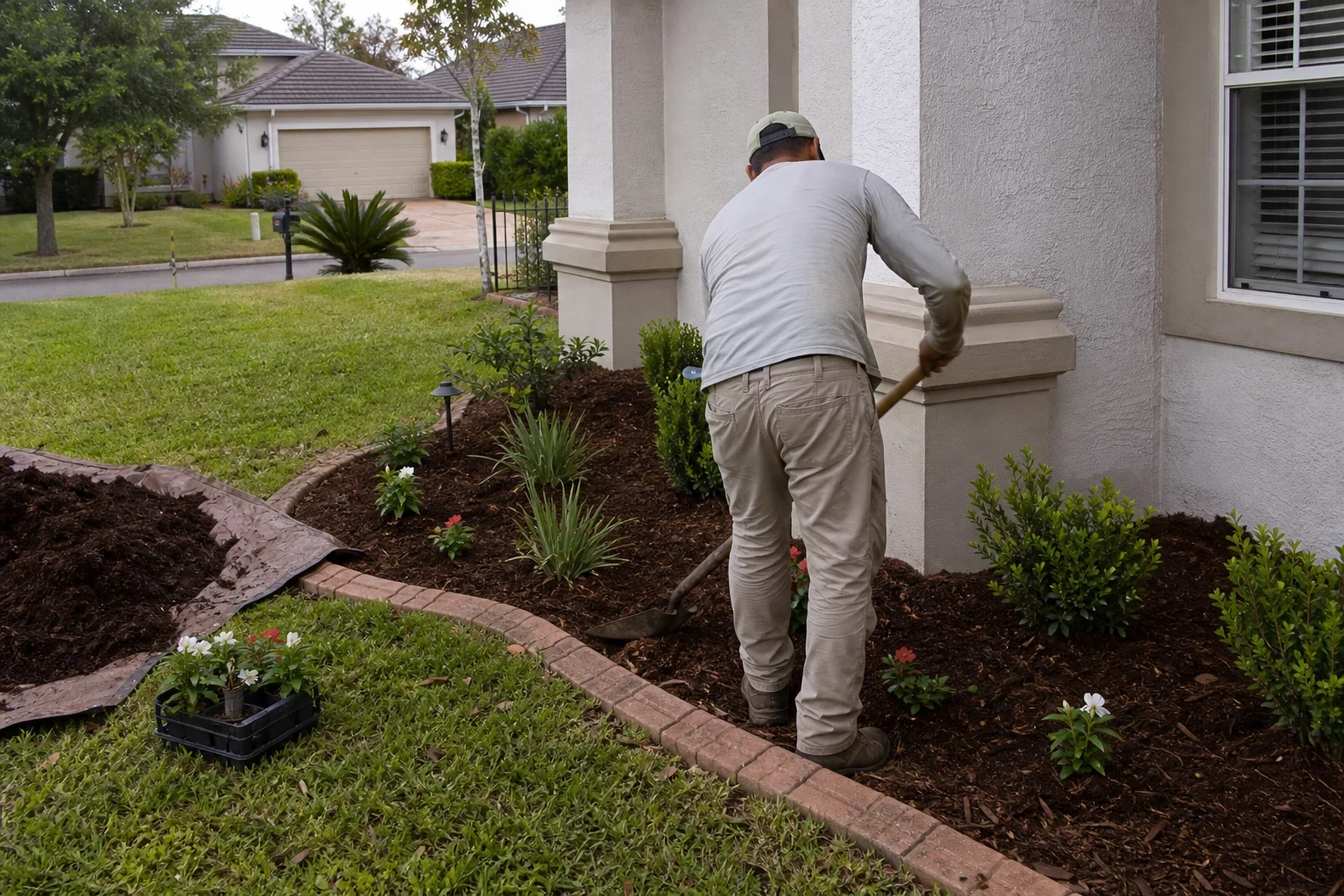
Beds That Protect the Plants You Already Have
Good mulch work is less about color and more about what happens underneath. A two to three inch layer shades the soil, keeps sandy ground from drying out between waterings and stops most weed seeds from sprouting. Too thin and it washes away in the first heavy afternoon storm. Too thick and it smothers roots and holds water against trunks.
Our approach is upkeep. Before adding anything new, we look at what is already in the bed: old mulch that has matted into a crust, edges that have crept into the lawn, shrubs buried too deep. We correct those first, then top dress. Your existing plants get a better place to grow, and the fresh layer lasts longer because it sits on a clean, loosened base.
We are a family-owned business, in business since 2018, and most of our bed work happens on the same properties season after season. That steady contact is how we learn which beds hold up and which need more attention.
What Our Mulch and Bed Service Includes
- Weeding and debris removal
- We pull weeds by the root, including nutsedge and dollarweed, and clear out leaves, palm fronds and old plant material before anything new goes down.
- Breaking up old mulch
- Mulch that has packed into a mat sheds water instead of letting it through. We rake and loosen it, or remove it when there is simply too much, so the new layer can do its job.
- Crisp bed edging
- We recut the line between bed and turf with a clean, angled edge. A defined edge keeps grass from creeping in and keeps mulch from spilling onto the lawn.
- Mulch or pine straw at the right depth
- We spread pine bark, hardwood, pine straw or other materials you choose at a consistent depth. Mulch is kept pulled back from trunks, stems and your home's foundation to discourage rot and pests.
- Light shaping and plant checks
- We trim back stray growth along the bed edge and note any shrubs that look stressed, so you know about problems early.
When Your Planting Beds Need Work
Soil is showing through
Organic mulch breaks down fast under steady heat and rain. Exposed ground dries out sooner and gives weed seeds an easy opening.
Pulled weeds return quickly
If new sprouts appear a few days after weeding, the cover is likely thin or patchy. More pulling will not fix that on its own.
Mulch ends up on the walkway
Lightweight bark floats off during summer downpours. A deeper edge and a material that settles better usually keep it in place.
Turf is creeping past the edge
Once the bed line fades, grass runners spread into the planting area. Restoring the edge early means far less digging later.
Mulch is mounded at trunks or walls
Cones of mulch around tree bases and material banked against the house keep bark and siding damp. Pulling it back now heads off rot and pests.
How a Bed Day Runs
- 1
On-site walkthrough
We walk your beds with you, check the depth and condition of what is there and talk through materials. You get a free estimate before any work is scheduled.
- 2
Prep and cleanup first
On the day, we weed, clear debris and loosen or remove old mulch. Edges are cut before new material arrives so the finished line is clean.
- 3
Spreading and finishing
Mulch is placed by hand around plants and spread evenly across open areas, with clearance left at stems and along your home's foundation.
- 4
Final tidy
We blow walks, drives and patios clear and haul away weeds and waste. Before we leave, we point out anything we noticed, such as a dry zone that may point to an irrigation issue.
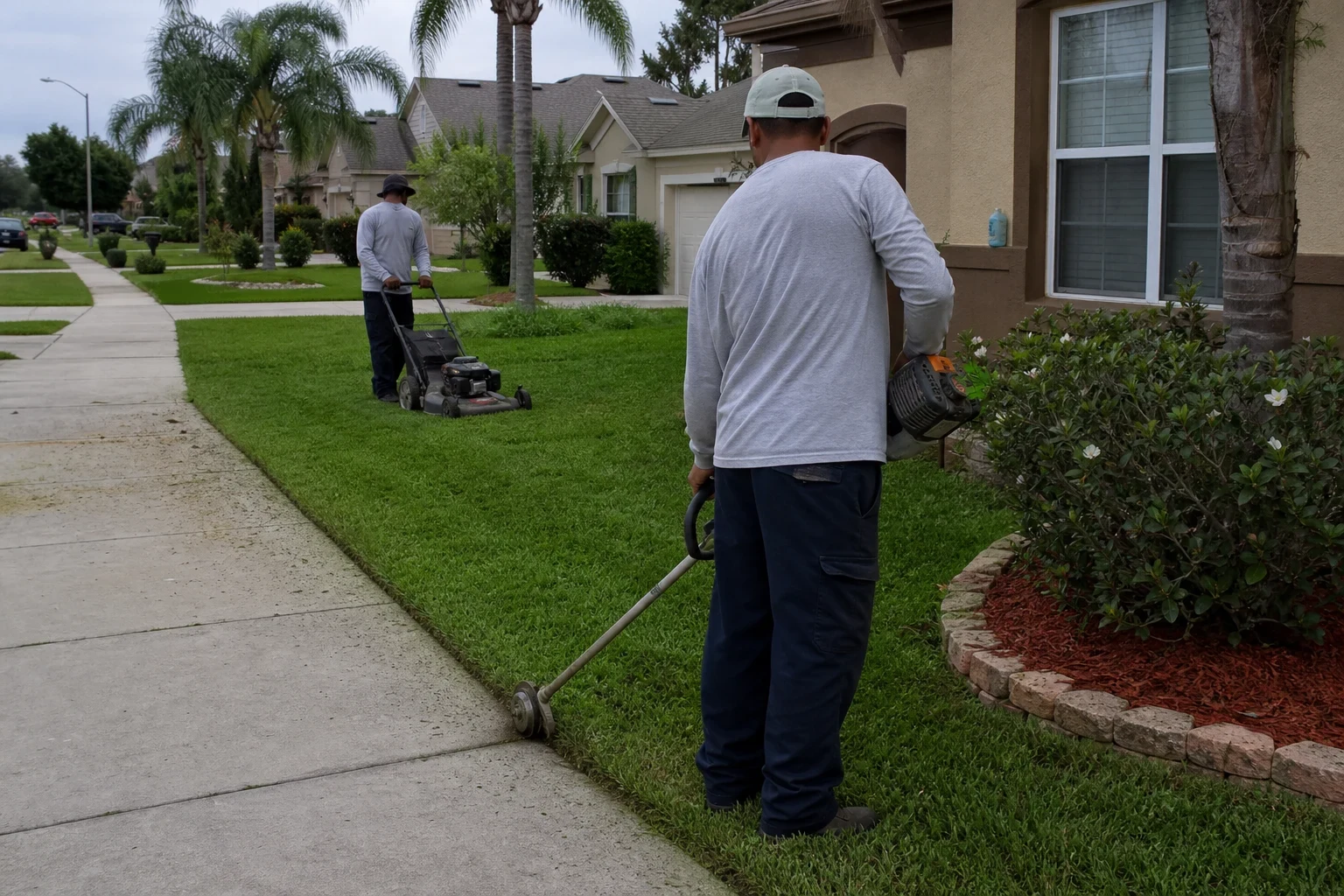
What Shapes the Cost of Mulch and Bed Work
No two yards have the same beds, so we set a price only after walking yours. Your written estimate puts labor and material on separate lines, so each charge is clear before anything starts. For larger projects that include bed work, financing up to $100,000 on 2–12-year terms, no prepayment penalties, is available.
- Total bed area
- Square footage and depth decide how much material is needed. Many narrow beds take more labor per foot than one large one.
- Condition of what is there
- Heavy weeds, matted mulch or overgrown edges add prep time. Beds that are kept up regularly cost less to refresh.
- Material choice
- Pine straw, pine bark, hardwood and decorative rock all vary in cost and in how long they last before they need topping up.
- Access
- Beds behind fences or far from the drive take longer to reach with each load of material.
Mulch and Bed Questions
Something not covered here? (407) 972-1906
How often should mulch be refreshed here?
Most beds around Kissimmee need a top dress once or twice a year. Heat, humidity and summer rain break organic mulch down faster than in cooler climates. Pine straw tends to need refreshing more often than bark. We can set a schedule that matches your beds and how you use them.
Should old mulch be removed before adding new?
Not always. If the old layer is still loose, we rake it and top dress. If it has built up too deep or matted into a crust, we take some or all of it out so the total depth stays healthy for your plants.
Which mulch works best?
It depends on the look you want and how much upkeep you prefer. Pine straw stays put on slopes and is light on plants. Bark nuggets look finished but can float in heavy rain. We will show you options during the walkthrough and explain how each one ages.
Does mulch attract termites?
Mulch does not draw termites by itself, but moist material against your home's foundation can give pests easy cover. We keep a clear gap between mulch and the walls of the house, which is a simple habit that lowers the risk.
Who will actually be working on my beds?
Our own crew does the work, and our business is licensed. The people you meet at the walkthrough are the ones responsible for how your beds turn out, so the details you discuss there carry through to the day of the job.
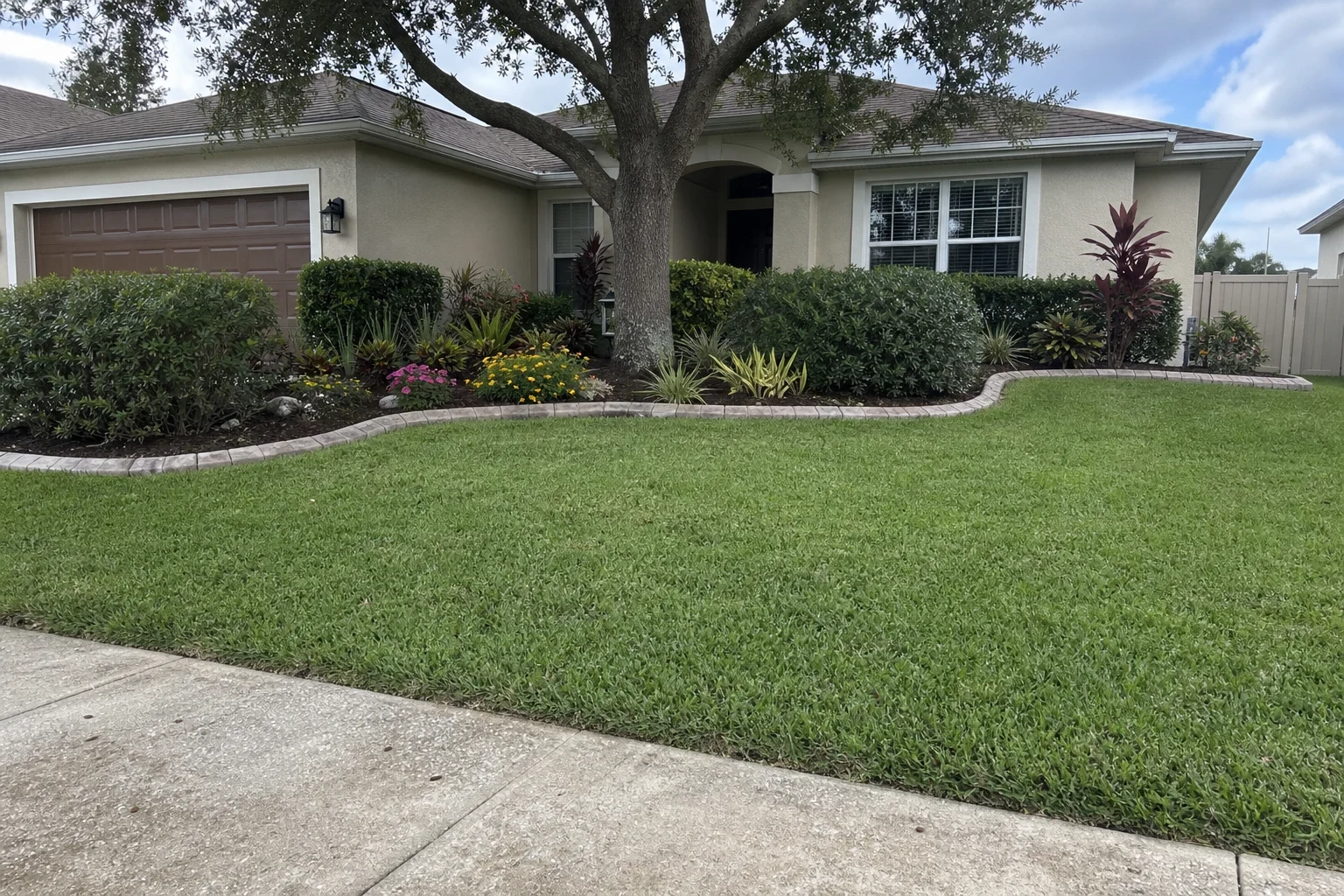
Give Your Beds a Better Base
We will walk your beds, explain what they need now and what can wait, and leave you with a free estimate. Ask about pairing bed work with lawn care or seasonal cleanup.