ServicesBamboo Removal
Bamboo Removal in Kissimmee
A grove that is only chopped back turns green again within weeks. We take out the canes, dig up the rhizome mass underneath and plan ahead for the shoots that try to return. You end up with ground you can replant and a clear picture of the care that keeps it clear.
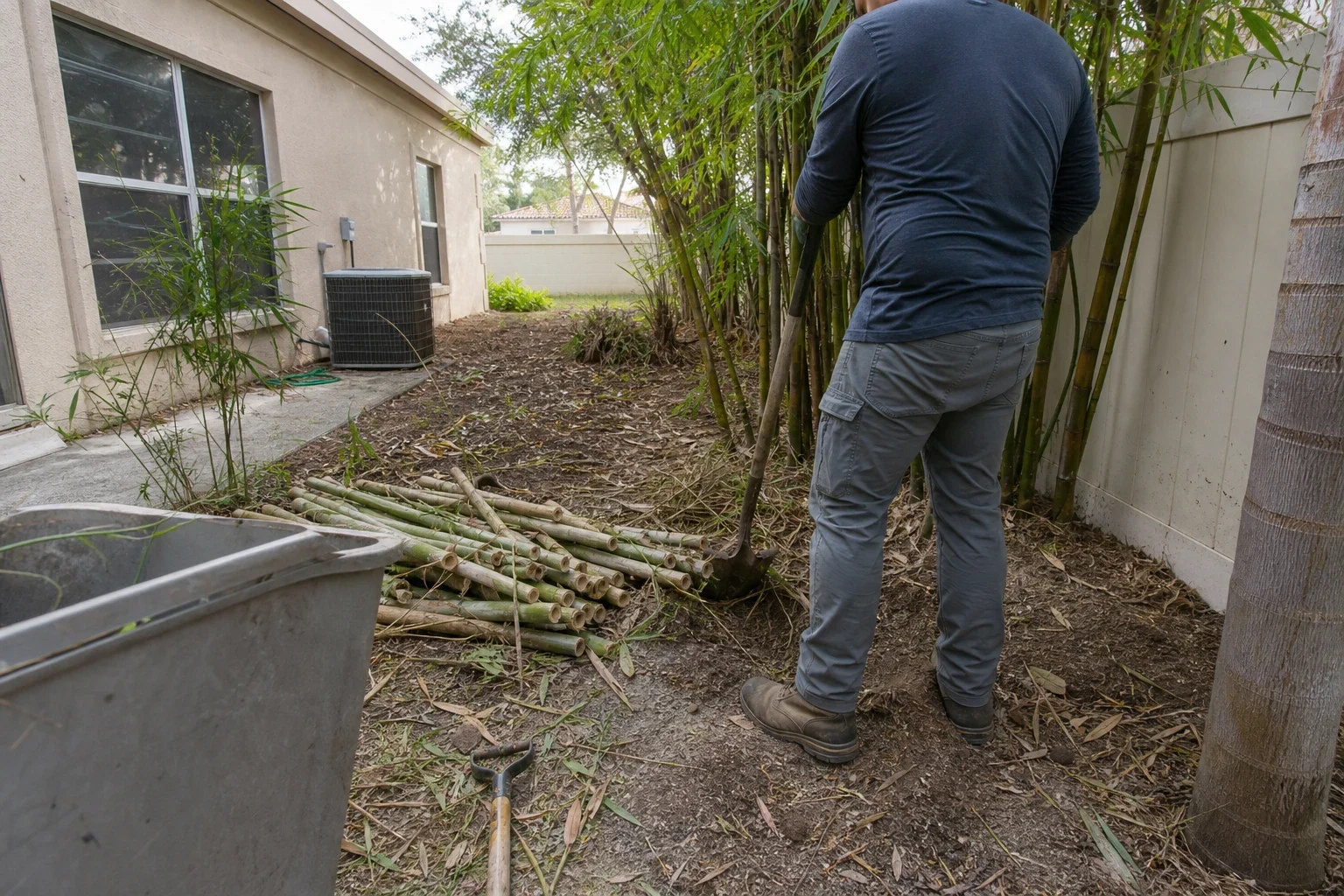
Removal That Accounts for What Grows Underground
Most of a bamboo planting lives below the surface. Running types send horizontal rhizomes several feet out from the visible canes, under fences, beneath pavers and into lawn and beds. Each segment can carry buds that become new shoots. That is why mowing or chopping a grove rarely works for long: the root network stays fed and keeps pushing up.
Our approach is the same one we bring to every property we look after. We treat removal as the first step in long-term care, not a one-time event. We take out the canes, excavate the rhizomes, sift the soil for broken pieces and return to catch what we missed. Clumping bamboo, which spreads more slowly, sometimes only needs thinning or containment, and we will tell you plainly when that is the better call.
Landscaping Kissimmee is a family-owned, business-licensed company, in business since 2018. We work across Kissimmee and nearby communities such as St. Cloud, Celebration and Hunters Creek.
What Our Bamboo Removal Includes
- Identifying the bamboo type
- We confirm whether you have a running or clumping variety and trace how far the rhizomes have traveled. That shapes everything else, from how deep we dig to whether a barrier makes sense.
- Cutting and hauling the canes
- Canes are cut low, bundled and hauled off your property. Mature culms are dense and heavy, so we plan the route out to protect lawn edges and beds along the way.
- Excavating the rhizome mass
- We dig out the woody root mat by hand and with compact equipment where access allows. Soil is sifted to pull loose rhizome segments, since a piece a few inches long can sprout again.
- Root barrier where it helps
- If bamboo is coming in from next door or you want to keep a contained planting, we can install a high-density polyethylene barrier set deep in the soil along the line that matters.
- Follow-up shoot checks
- We return after the removal to pull any new shoots while they are still soft. Catching them early is far easier than letting them harden into canes.
- Regrading and site prep
- Once the ground is clear, we backfill and level the area so it is ready for sod installation, new mulch and beds, or a fresh plan from our landscape design work.
When Bamboo Has Outgrown Its Place
Spears coming up in the turf
Pointed shoots rising several feet away from the grove tell you rhizomes are traveling beneath your grass. Left alone, they keep heading outward.
Pushing under fences or pavers
Lifting pavers, cracked edging or shoots on the far side of a fence show the root network is reaching structures and the yard next door.
A grove you can no longer walk into
When canes are so dense that dead culms pile up inside, the planting has outgrown any reasonable trimming plan.
Crowding out other plants
Shrubs and beds near bamboo often thin and decline because the rhizomes take the water and space. Our long Florida growing season gives bamboo a steady advantage.
Cutting it back has stopped working
If you mow or chop the grove and it returns within weeks, the underground mass is intact and needs to be dug out.
How a Bamboo Removal Job Runs
- 1
On-site walkthrough
We walk the property with you, mark where the canes and runners are, note fences, irrigation lines and hardscape nearby, and talk through removal versus containment. You get a free estimate based on what we saw.
- 2
Protecting the surroundings
Before work starts, we flag sprinkler heads and lines and set down protection over lawn areas we need to cross. If irrigation repairs turn out to be needed afterward, our irrigation work can handle them.
- 3
Cut, dig and sift
We clear the canes, then excavate the rhizome mat section by section and sift the soil. Larger groves can take more than one day, and we leave the site tidy at the end of each one.
- 4
Barrier, backfill and cleanup
Where planned, we set root barrier, backfill with clean soil and level the area. All debris leaves with us.
- 5
Return visits
We come back to check for and remove new shoots. Bamboo grows fastest in the rainy summer months, so timing of these visits matters.
What Shapes the Cost of Bamboo Removal
Every grove is priced on its own, since most of the labor happens below ground and depends on how far the bamboo has traveled. Our estimate comes from what we find on the walkthrough, with digging, hauling, barrier and restoration listed separately so the scope is easy to follow. For larger projects, financing is available up to $100,000 on 2–12-year terms, no prepayment penalties.
- Running or clumping type
- Running bamboo usually means more excavation and often a barrier. Clumping bamboo is more contained and generally less work to remove.
- How established the planting is
- A grove that has been in the ground for years builds a thicker, deeper rhizome mat and carries more canes to haul away. Any spread into lawn or beds widens the digging area.
- Access and nearby structures
- Tight side yards, fences, slabs, pool decks and utility lines slow the work and may require more hand digging instead of equipment.
- Barrier and restoration
- Installing root barrier, bringing in fill soil, or following removal with sod or new plantings adds to the scope.
Bamboo Removal Questions
Something not covered here? (407) 972-1906
Can you just spray the bamboo instead of digging it out?
Spraying alone rarely clears an established grove because the rhizome network stores so much energy. We rely on cutting and excavation as the main method. That gives you clean, usable ground sooner and less guesswork about what is still alive below.
Bamboo keeps crossing over from next door. Is there a fix?
On your side of the boundary, we dig out every cane and runner, then set a root barrier along the line to hold back new rhizomes. It has to go in deep, with its top edge left slightly above grade so runners cannot ride over it. During the walkthrough we will mark exactly where it would run.
Will new shoots come back after removal?
A few usually do, because small rhizome pieces can be left in the soil. That is why we schedule return visits to pull them early. After a growing season of checks, most areas are fully clear.
What about the stumps and root crowns left behind?
Bamboo does not leave a single stump like a tree. The woody crowns are dug out as part of the rhizome excavation. If you also have tree stumps nearby, our stump grinding service can be done in the same visit.
What can I plant where the bamboo was?
Once the ground is cleared and leveled, it is ready for sod, beds or a new design. We suggest waiting for the first follow-up check before planting anything permanent so we can confirm the area is clean.
Get a Clear Plan for Your Bamboo
We will walk your yard, trace where the rhizomes have gone and explain whether removal or containment makes more sense. You leave the conversation with a free estimate and no pressure.