ServicesLawn Care
Lawn Care in Kissimmee
We look after the lawn you already have: mowing at the right height, clean edges, careful feeding and an eye on pests and fungus. Steady visits keep turf thick and slow the thinning that leads to costly resodding later.
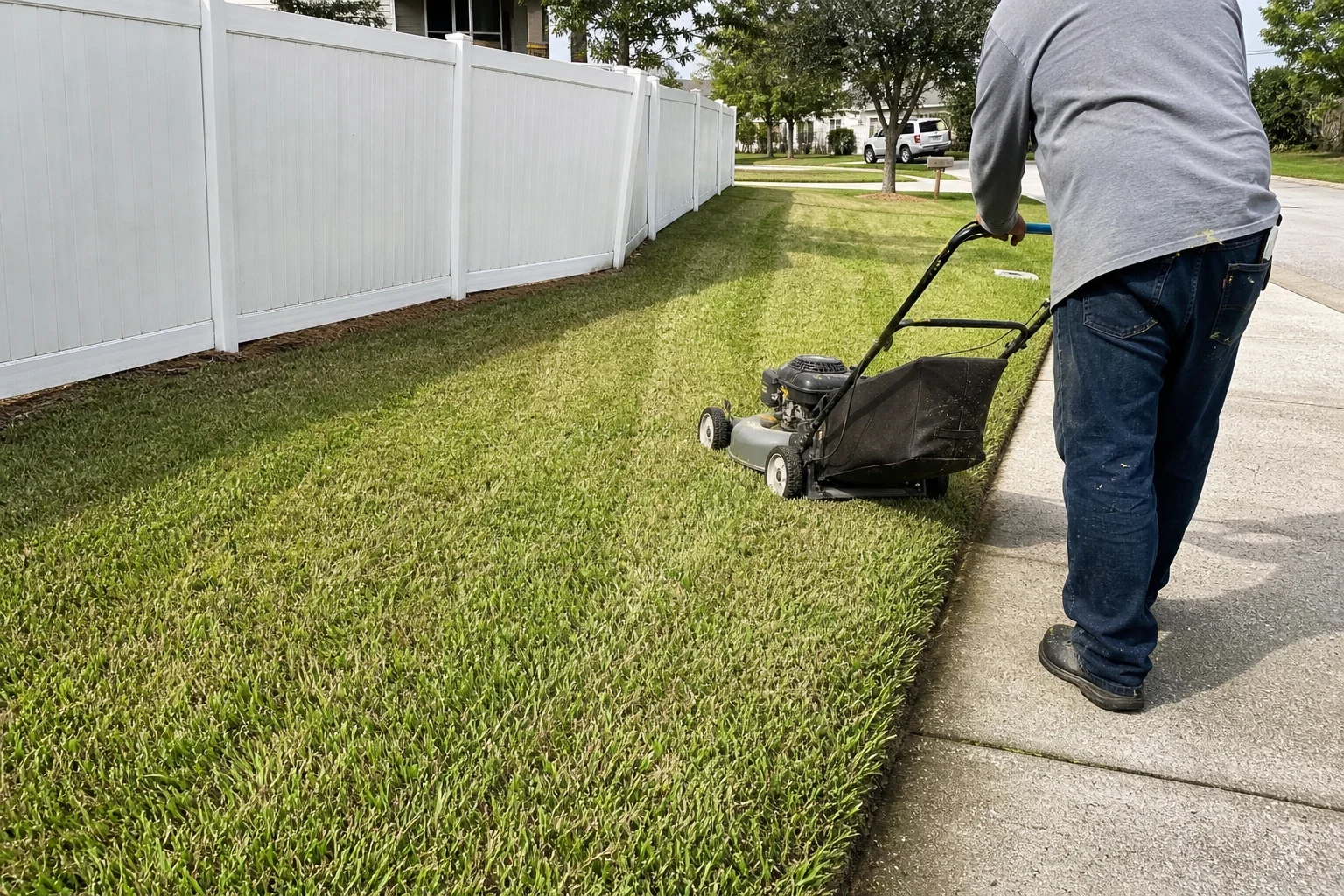
Care That Keeps Good Turf Growing
Most lawns don't fail all at once. They thin out over a season or two because the grass is cut too short, fed at the wrong time or left alone while chinch bugs or brown patch spread. Our lawn care is about catching those small things early so the grass you have keeps filling in on its own.
St. Augustine, zoysia and bahia each want different treatment. St. Augustine likes a taller cut and suffers fast when scalped. Zoysia wants a lower, sharper cut. Bahia handles sandy soil and dry spells but grows seed heads that need regular mowing. We set our routine to the grass in front of your home, not a one-size schedule.
Landscaping Kissimmee is a family-owned business. We hold a business license and have been in business since 2018. You can see that steadiness in small habits: freshly sharpened blades, neat edges and clippings cleared off your walks and driveway before the crew leaves.
What Our Lawn Care Includes
Mowing at the right height
We cut to suit your grass type and season, never taking more than about a third of the blade at once. Blades are kept sharp so the grass is cut cleanly instead of torn, which helps it resist disease.
Edging and trimming
Crisp edges along walks, driveways and beds, plus string trimming around fences, trees and utility boxes. Clippings are blown back onto the lawn, not left on hard surfaces.
Feeding on a sensible schedule
We fertilize when the grass can actually use it and follow local fertilizer rules. Slow-release products feed steadily and reduce runoff after heavy rain.
Weed, pest and fungus checks
Each visit is a chance to spot chinch bug damage, large patch or spreading weeds while they are still small. We tell you what we see and what we recommend before treating anything.
Watering advice
Many lawn problems start with too much or too little water. If your system needs adjusting, we explain what to change, and our irrigation service can handle repairs.
When Your Grass Is Asking for Attention
Tan spots that widen in the heat
Patches that fade to a dull, dried-out color and grow through summer, often starting along the hot edge of a driveway or sidewalk, are a common mark of chinch bugs feeding in St. Augustine.
Rings that appear after wet weather
A circle of thinning grass with a darker, orange-tinged border is usually large patch fungus. It favors the cooler, damp part of the year and keeps growing while blades stay wet overnight.
Weeds where grass used to be
Thin turf leaves room for dollarweed, crabgrass and sedge. Pulling them clears the spot for a week or two; thicker grass is what keeps them out for good.
Bare soil after a mow
If dirt shows once the mower passes, the deck is set too low or the ground has high spots. Cut that way often enough and the roots weaken and weeds take over.
A bouncy, spongy feel
Grass that gives like a cushion underfoot often sits on a mat of dead stems. That layer holds water and fertilizer above the soil, where the roots can't use it.
How a Lawn Care Visit Runs
- 1
Walkthrough first
We start with a free walk around your yard to identify the grass, check soil and shade, and note any pest or fungus problems. You get a clear plan and a written estimate.
- 2
Setting the schedule
Mowing usually runs more often in the warm, rainy months and less in winter. We agree on a rhythm that fits how fast your lawn grows.
- 3
The visit itself
Our crew mows, edges, trims and blows off hard surfaces. Gates are closed behind us and pets are kept in mind.
- 4
Notes and follow-up
If we spot something worth attention, like a dry zone or early fungus, we let you know and explain the options before doing any added work.
What Shapes the Cost of Lawn Care
Every yard is priced after we see it, so the estimate reflects your lawn and not a guess. The main drivers are size, how often we visit and what extra treatments are needed. You get the price in writing before work starts.
- Lawn size and layout
- Open, flat lawns go faster than yards broken up by beds, trees and tight side strips that need more trimming.
- Visit frequency
- Weekly visits in the growing season cost more over a year than every-other-week service, but keep grass healthier and easier to cut.
- Where the lawn is starting from
- Grass that has gone a season without attention usually takes a couple of heavier first visits to bring the height and edges back. After that, routine service settles into its normal pace.
- Added treatments
- Fertilizing, weed control and pest or fungus treatment each appear as their own line on the estimate. If your grass doesn't need one of them, it simply stays off the bill.
Lawn Care Questions
Something not covered here? (407) 972-1906
How short should my grass be cut?
It depends on the grass. St. Augustine does best around three and a half to four inches, while zoysia is kept shorter. Cutting too low is one of the most common reasons lawns thin out, so we keep heights on the generous side.
Do I need to be home for visits?
No. If the crew can get through the gate and dogs stay indoors on visit day, the work gets done without you there. We latch every gate on the way out.
Can regular care save a lawn that already looks rough?
Often, yes. If the grass is thin but still alive, steady mowing, feeding and pest control can bring it back over a season. If large areas are dead, we will tell you honestly and talk through sod installation for those spots.
How often should my lawn be fertilized?
Most warm-season lawns do better with a few lighter feedings spread through the growing season than with one heavy dose. Some local rules restrict certain fertilizers during the summer rainy months, and we time feedings around them. We will suggest a schedule after seeing your grass and soil.
Do you bag clippings?
Usually not. Fine clippings return nutrients to the soil. We bag only when the grass is overgrown or clumping would smother the lawn.
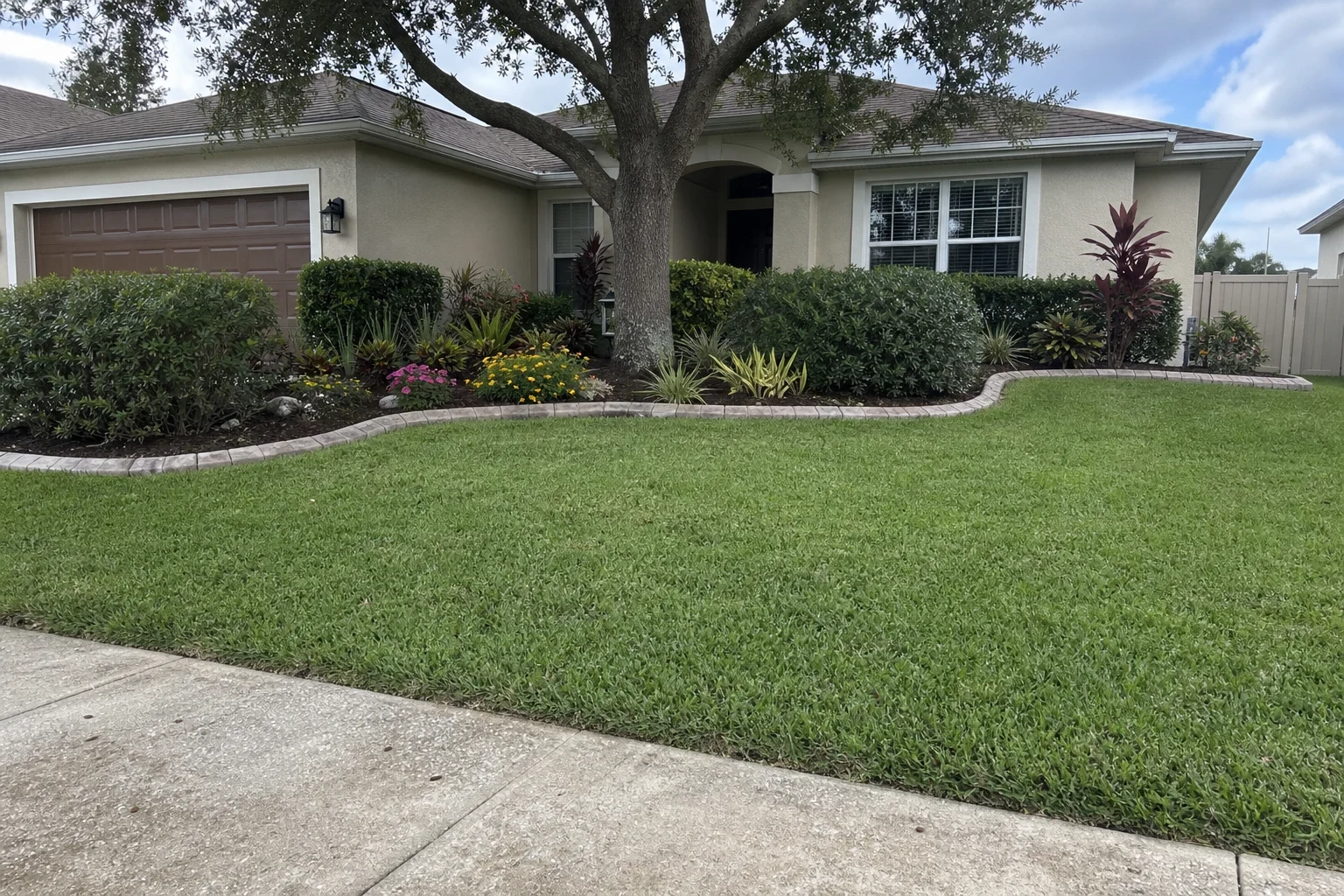
Let's Look at Your Lawn Together
We will walk your yard, identify the grass and explain what it needs to stay thick and healthy. The visit and estimate are free.